
Canopy Completes Private Testnet With Over 27K Chains as Public Testnet Goes Live

Canopy has completed its private testnet after recording nearly 27,000 chains created in the first 12 days, marking one of the strongest early adoption signals for an app-chain infrastructure platform this year. As of this week, more than 2,300 chains were deployed in the past 24 hours alone, underscoring accelerating builder activity ahead of the public testnet launch.
The network onboarded over 7,100 users during the private phase, with roughly 5,100 remaining active. That retention rate indicates sustained developer engagement rather than one-off experimentation, as teams continue to deploy and refine application-specific chains in preparation for upcoming ecosystem milestones.
On Feb. 12, Canopy officially opened its public testnet, expanding access to the wider community. Developers can now create and deploy custom Layer-1 (L1) blockchains directly through Canopy’s live portal, removing traditional infrastructure bottlenecks that historically have slowed chain launches.
App-Specific Chains in Minutes
Canopy positions itself as the fastest way to build, secure, and launch high-performance blockchains. Unlike legacy frameworks that require months of protocol engineering and specialized blockchain expertise, Canopy allows developers to build in familiar languages such as Go, Typescript, Python, C#, and Kotlin.
At the center of this acceleration in development rollout is Canopy Templates — a development framework built specifically for AI coding.
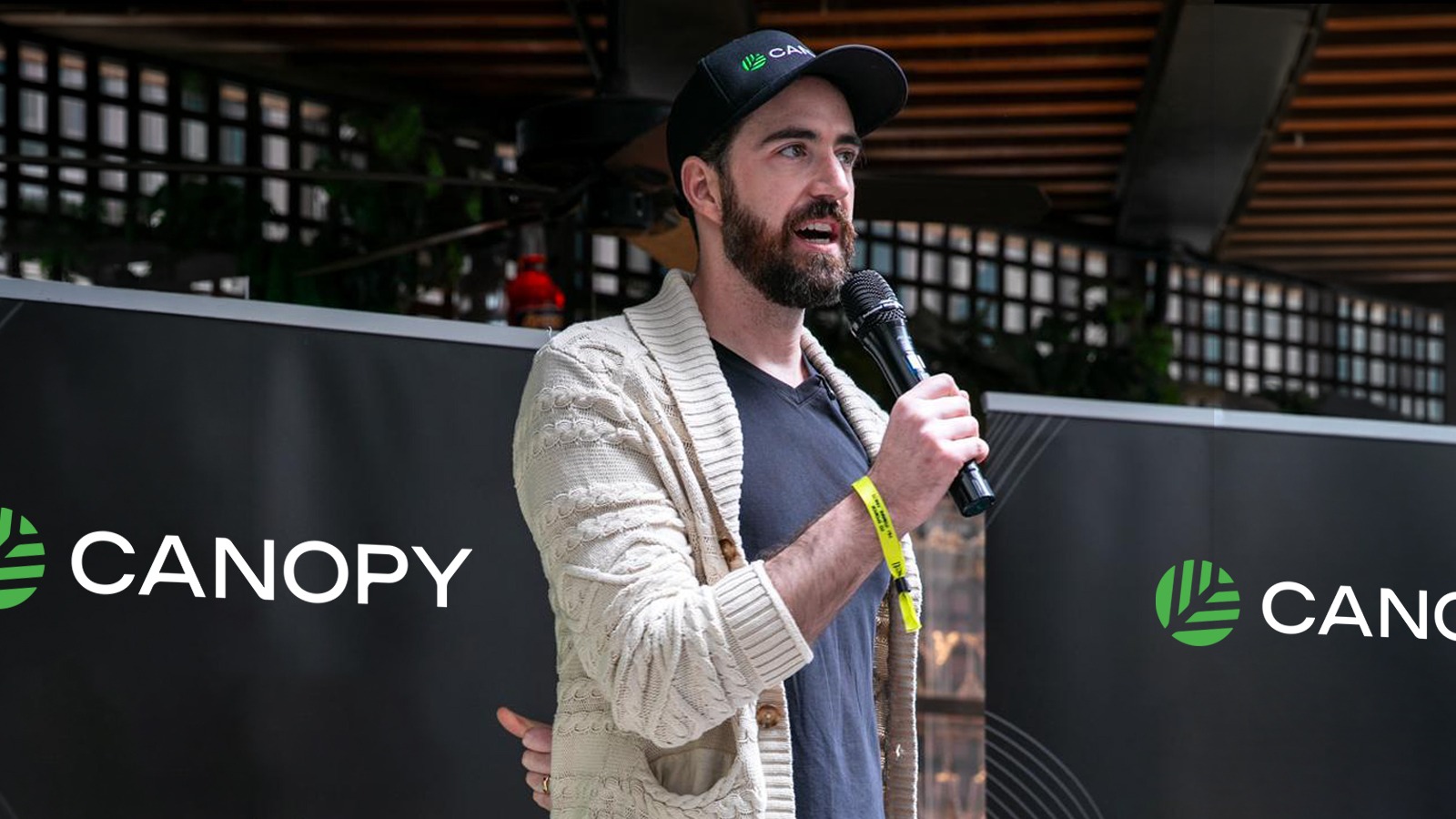
Adam Liposky, CEO of Canopy, said:
“Blockchain development has been far too complex for far too long. By reducing a full L1 implementation to something both humans and AI can actually understand end-to-end, we’re collapsing the time between idea and deployment from months to mere minutes.”
Canopy Templates compresses a complete L1 chain implementation into roughly 200 lines of readable, language-native code. These Templates are intentionally concise to enable both developers and AI tools to reason about the entire system at once.
Traditional blockchain architectures often exceed AI context window limitations, limiting AI assistance to incremental edits. Canopy’s 200-line structure fits comfortably within those limits, enabling AI models to participate in full-system design and iteration. Templates eliminate the need for virtual machine-specific languages, allowing developers to work directly in mainstream programming environments without becoming master code translators.
Built-in Upgrades for Rapid Iteration
Immutability has forced blockchain teams into slow, high-stakes deployment cycles for years. Canopy addresses this with embedded upgrade capabilities at the chain level, so that validator coordination for updates becomes automated, and teams can deploy, iterate, and refine without complex migration strategies.
Andrew Nguyen, Co-Founder and CTO of Canopy, said:
“The private testnet validated what we set out to achieve, and what we believed in, from day one. Developers want easier L1 deployment and management, with less friction and easier AI collaboration. The traction we’re seeing now shows that the demand we anticipated is real and that deployment infrastructure today needs to move at AI speed, not legacy blockchain speeds.”
The strong retention of private testnets suggests developers are actively building and refining chains rather than conducting superficial tests.
Native Cross-Chain Liquidity With Canopy Atomic
In January, Canopy introduced Canopy Atomic, a built-in cross-chain trading system that provides instant, trustless liquidity without requiring bridges or intermediaries. The system integrates two native liquidity models:
- An atomic on-chain order book optimized for peer-to-peer (P2P) cross-chain trading and large transactions with minimized slippage.
- A cross-chain atomic automated market maker (AMM) providing continuous liquidity with dynamic pricing.
Both models execute trades atomically across chains, meaning transactions either fully settle or fail entirely. This removes counterparty risk and reliance on custodial bridges or wrapped assets. By embedding liquidity directly into the protocol, Canopy reduces cross-chain complexity for developers and enables capital movement at institutional scales.
With the public testnet now live, Canopy opens its doors to the world. Developers can now create chains, iterate using Templates, and soon access integrated liquidity systems without custom integrations or bridge risk.
If private testnet metrics are any indication, chain deployment at scale is shifting from a months-long engineering commitment to a process that takes minutes.

Forge new ground with your sovereign app
Let your ideas take root and thrive. Deploy in minutes, with instant protection, distribution, and ownership.

Revolutionizing blockchain for every builder. Driving limitless creation with top-tier infrastructure.


